


 Laura Wildenborg has had a passion for the outdoors and sustainability as far back as she can remember. Early in her professional career, she led outdoor education and adventure courses for a variety of organizations in southern Minnesota. She taught groups ranging from elementary school students to senior citizens about everything from kayaking and whitewater rafting to hiking and surviving in the woods in the winter.
“My role as an outdoor educator was to enable students to learn through experience,” Wildenborg says. “It was about nurturing confidence, curiosity, and a deep appreciation for nature, laying the foundation for lifelong environmental stewardship.”
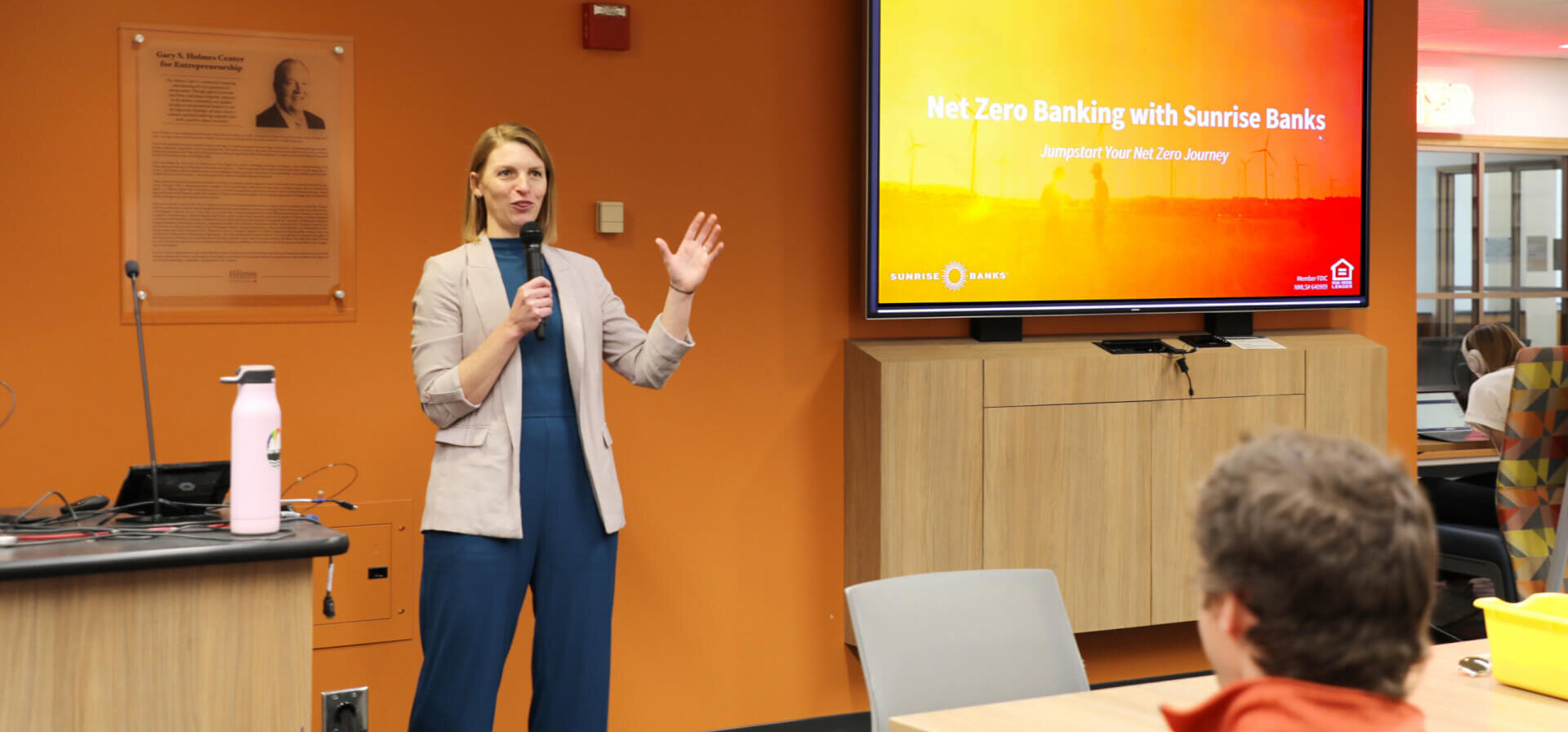
Wildenborg’s background in environmental sustainability now takes center stage in her current role as Vice President of Strategic Lending at Sunrise Banks. She is the driving force behind the company’s Net Zero Banking program, an innovative way for customers to use their accounts to positively impact climate change.
The Road to Creating Net Zero Banking
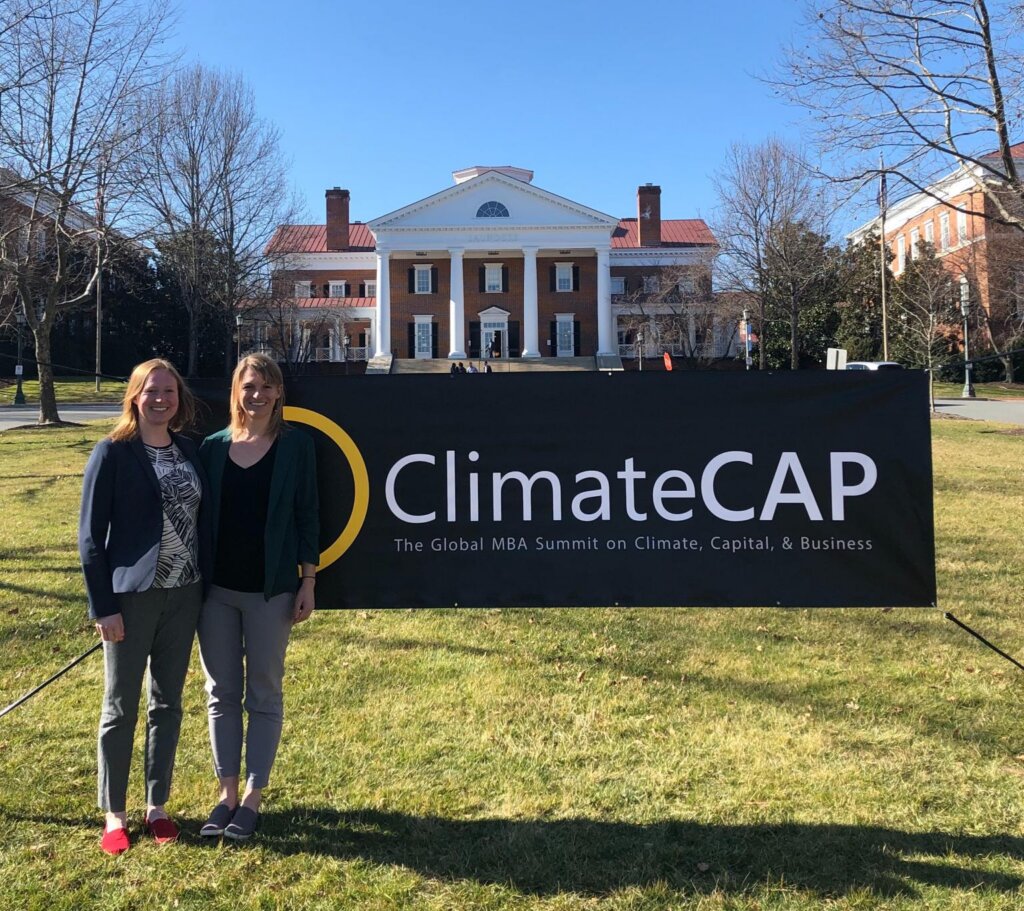 Eventually, Wildenborg left her outdoor education job to pursue her MBA at the University of St. Thomas in St. Paul, Minnesota. While there, she connected with representatives from Sunrise Banks. That meeting led to a summer internship, then a full-time position on the bank’s financial technology, or fintech, team. In that role, Wildenborg built new partnerships with fintech-based customers and worked to further the bank’s mission of promoting financial wellness.
That work expanded into furthering the bank’s mission as a Certified B Corporation Off Site Link – a designation for organizations that are committed to meeting high, verified standards related to social and environmental performance, transparency and accountability. Wildenborg focused on building a strategy for the bank to reach net zero carbon emissions, companywide, by the year 2050.
“I analyzed the financed emissions of our loan portfolio, which highlighted the critical role of decarbonization in climate action,” says Wildenborg. “That work helped me see how the relationship between deposits and lending could be leveraged to support our customers’ carbon reduction efforts while advancing our bank’s own net zero goals.”
And through that work came a realization – that a bank account could be a simple, yet effective tool for customers to make positive inroads in the fight against climate change.
With that realization in mind, Wildenborg began building the framework for the Net Zero Banking program at Sunrise Banks. It consists of two key components: Net Zero Deposits and Net Zero Lending.
Why Where You Bank Matters
When you deposit money into a checking, savings or CD account, it doesn’t just sit there. Banks actively use that money as leverage for loans to fund a variety of projects, including some that actively harm the environment.
According to nonprofit Project Drawdown, big banks in the U.S. lend as much as 30 percent of their portfolio to industries that produce large amounts of carbon emissions.
These can include oil and gas companies, aviation, transportation, mining, and data/tech centers.
A handful of banks have publicly pledged to be more climate friendly. Some are choosing to cut emission-heavy customers from their portfolio. Others lend to projects that actively cut carbon emissions or avoid putting them into the atmosphere altogether.
Wildenborg’s idea for Net Zero Banking takes that one step further. With Net Zero Deposits, customers can direct their money towards Net Zero Financing loans for climate-friendly projects, such as energy efficient building upgrades, electric vehicles, or solar panel installations.
“Many people have never considered how their bank account could impact climate change,” says Wildenborg. “That moment of realization is powerful as it shifts the conversation from abstract sustainability to something personal and actionable.”
The Launch and The Feedback
 Wildenborg worked with multiple teams within Sunrise Banks to develop the Net Zero Banking program. By the spring of 2024, the program was ready for its soft launch. The plan was to first roll it out to the bank’s business customers, then expand it to personal banking customers.
Wildenborg sought to make the process as simple as possible for customers. All they have to do is tell a banker they want to earmark their savings, checking or CD account as a Net Zero Deposits account.
“What struck me most is how passive the action is and how choosing where your money sits can have a major climate impact,” she says. “It is rare to find something so simple yet so effective. It feels like a no-brainer.”
Yet, Wildenborg says no other banks in the U.S. are addressing climate change the way Sunrise Banks is with its Net Zero Banking program.
In discussing the growing demand for climate-aligned financial products, Wildenborg emphasized what sets the model apart: “Net Zero Deposits is unique because it tells you the story behind your bank account. You know exactly how your money is being put to work by funding decarbonization projects, and you can even calculate the carbon footprint of your savings. It’s banking with transparency, purpose, and measurable climate action.”
Documenting the proof
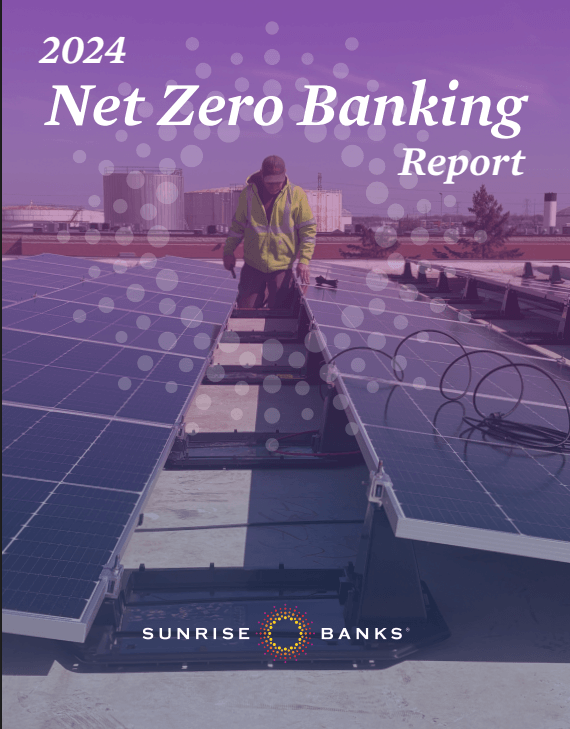 The Net Zero Banking program has now been out in market for nearly two years. Last summer, Sunrise Banks released its first report detailing the program’s impact, to date. It also compared those impacts to other ways people may choose to cut their carbon footprint.
For example, the report showed in the first six months of the program, customers directed approximately $4.4 million in Net Zero deposits to loans that funded climate-friendly projects.
Those projects prevented about 242 metric tons of carbon dioxide from entering the atmosphere. That is equivalent to powering 50 single-family homes with clean electricity for one year.
The report also showed that holding $10,000 into a Net Zero Deposits account cuts the same amount of carbon emissions as driving an electric vehicle for one year.
Highlighting the power of everyday financial decisions, Wildenborg noted, “Shifting your money from a carbon-intensive bank account to Net Zero Deposits is a simple, high-impact climate action. It ensures your funds actively advance sustainability and community resilience.”
Educating the public
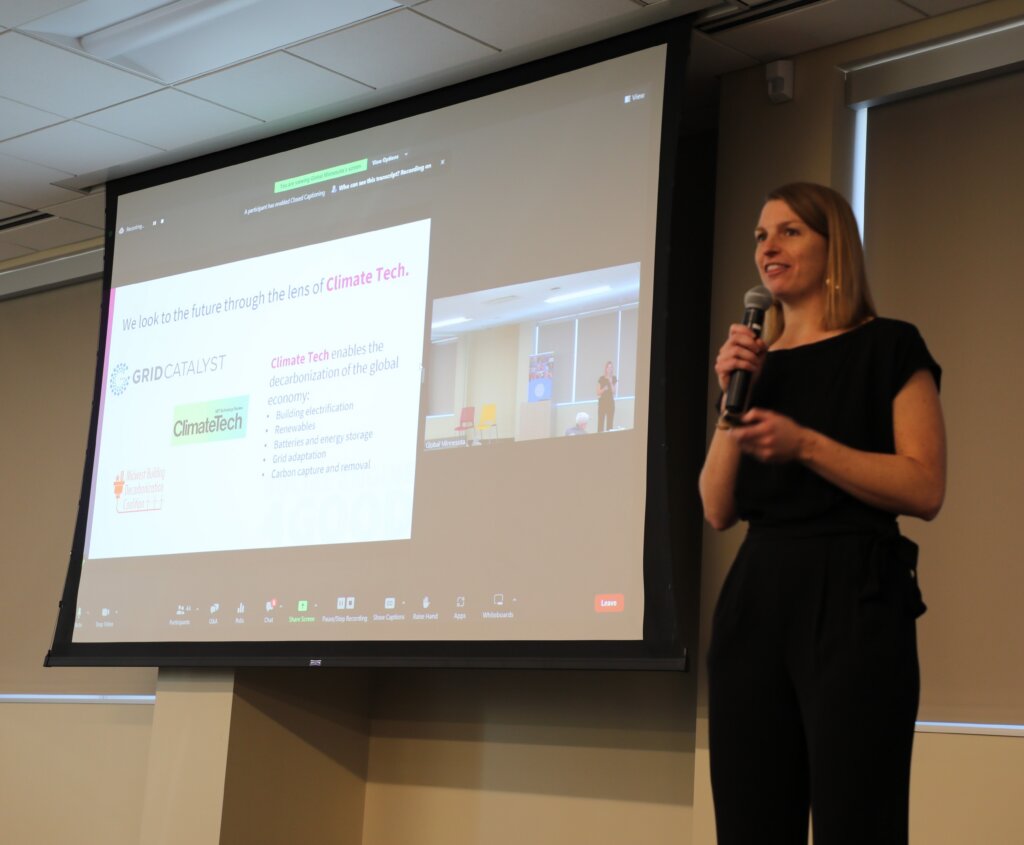
Wildenborg has given dozens of presentations and interviews over the past 18 months, promoting the benefits of Net Zero Banking. She says education has become a powerful tool in highlighting that impact, especially to customers who want to find companies with similar values.
“We see a spike in new accounts after nearly every presentation or webinar,” she says. “The enthusiasm is translating into real growth as people share what they’ve learned with their communities.”
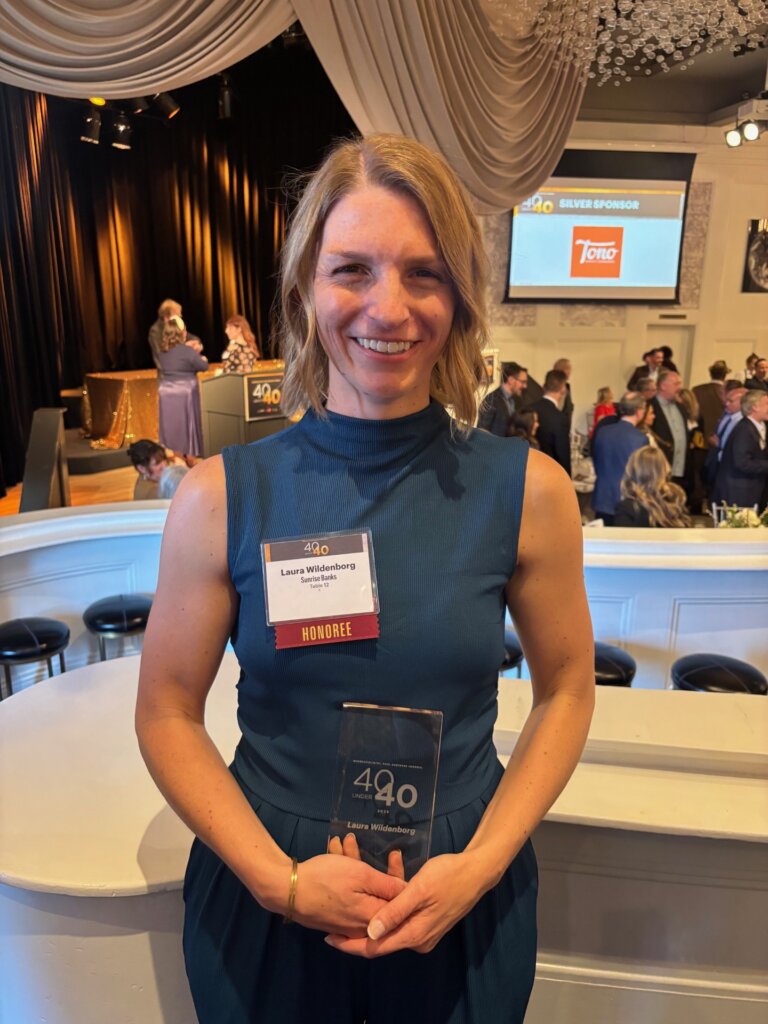 Wildenborg has also been personally recognized for her work in developing the Net Zero Banking program at Sunrise Banks. The Minneapolis/St. Paul Business Journal honored her as one of its 2025 40 Under 40 Off Site Link recipients. Finance and Commerce, another Twin Cities business newspaper, named her to its 2024 Top Women in Finance Off Site Link list. She was also named an Outstanding Women in Banking Off Site Link recipient by BankBeat Magazine.
While the awards and accolades are special, Wildenborg says what matters most is the long-term impact of Net Zero Banking and its effect on climate change. In the long term, she sees Net Zero Banking becoming a catalyst for communities that want to become more climate resilient.
“This program should not only fund Net Zero projects but also serve as a resource for companies – and individuals – pursuing sustainability,” she says.
Learn more about Net Zero Banking at Sunrise Banks by visiting sunrisebanks.com/net-zero-deposits.
Member FDIC.
This story was originally published on GreenMoney.com Off Site Link.