


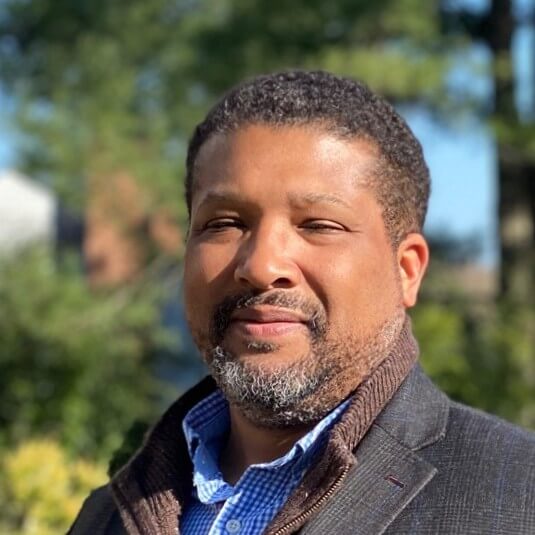
Featured Guest:
Brian Tate, CEO, Innovative Payments Association
A native Marylander, Brian is a graduate of the Howard University School of Law and is licensed to practice in the state of Maryland and the U.S. Supreme Court. In addition, Brian has an M.A. in political management from The George Washington University, and a B.A. in political science from King’s College (Pa.). Brian was also a White House intern during the Clinton administration in 1996.
After graduating from law school in 2004, Brian first started working in the financial services sector when he began working as an advocate for the credit union industry. During his time with the credit unions, Brian held the position of vice president for legislative affairs (MDDCUA) and director of state advocacy (CUNA).
In 2009, Brian joined the Financial Services Roundtable as vice president of banking. At FSR, Brian represented banks, card issuers and networks, asset management and insurance companies. Further, Brian led FSR efforts on interchange fees, orderly liquidation authority, fiduciary duty and retirement security. Work with member companies to develop public policy agenda and advocacy strategies on a wide range of issues before the administration, Congress and regulatory agencies.
Brian Tate currently resides in Silver Spring, Maryland, with his wife and three children.
Episode Transcript
0:02: Welcome to Social Currency powered by Sunrise Banks, a podcast about the most innovative change makers in finance, technology, and social impact, and how they, our guests, are dismantling barriers, reshaping their industries, and perhaps even ours too.
0:16: I’m your host, Tyler Seydel.
0:19: And I’m Eric Schurr.
0:20: Here we speak to those driving positive change through social entrepreneurship, from cutting edge technology to creative grassroots efforts.
0:29: Each episode seeks to reveal the stories behind the revolution that is propelling us toward a world of financial inclusivity.
0:37: I’m Tyler Seydel, and I’m Eric Schurr, and today we’re going to be talking about the current regulatory environment and what the future of the industry holds.
0:46: And today’s guest sits at the crossroads of finance, innovation, and policy.
0:50: He’s the president and CEO of the Innovative Payments Association, or what we maybe colloquially referred to as the IPA.
0:58: Before that, he was the vice president of banking and securities at the Financial Services Roundtable.
1:02: He holds a law degree from Howard University.
1:05: He is not just watching the payments revolution, he’s helping to shape the industry and policy that surrounds it.
1:11: Our guest today is Mr.
1:13: Brian Tate.
1:14: Brian, to start us off today, can you walk me through the professional journey?
1:19: Like what drew you to the regulatory and legislative landscape of DC and how did that path lead you to your current role as the CEO of the Innovative Payments Association?
1:30: Well, first, I want to thank Tyler and Eric, both of you for inviting me to participate in the podcast.
1:37: I think this is great to have this conversation about what’s going on in DC.
1:42: So I very much appreciate the opportunity to join you today.
1:46: That being said, it looks like you took a peek at my LinkedIn profile at the very least.
1:51: So, I would say, you know, to start off.
1:53: And I’m gonna borrow a line from the former CEO of US Bank, you know, nobody grows up wanting to be a banker.
2:04: Yeah, they want to do something more exciting, you know, be an athlete, or a fireman, or a policeman, or something else that has more adventure to it.
2:13: And I will probably say I’m no different from anyone else in that respect, but honestly, I got my start, not by accident, by happenstance, probably.
2:22: After law school, I was looking for a job, and I ended up getting hired by the Maryland and DC Credit Union Association.
2:33: And so I got my start in banking with the credit unions, and knew nothing about credit unions or much beyond banking generally, you know, beyond my checking account.
2:46: And so, they had asked me to come in.
2:48: They were looking for a government relations person.
2:51: I’d never done government relations, but the fun part was, to be honest, since I was new, I was their first government relations person.
3:01: We kind of just made it up as we went along.
3:04: And, you know, there’s fits and starts, but you do learn, in my opinion, the best by just doing it.
3:11: And I did a lot of kind of state work in Annapolis, because of our jurisdiction, I had engagement with the DC City Council, drove all over the state of Maryland, even though I was from Maryland.
3:23: And saw parts of the state I’ve never been to before.
3:26: So, in that sense, it was a good learning experience, plus I got to learn a little bit about banking.
3:33: And while credit unions don’t necessarily have, for the most part, the diversity of issues and products that banks do, I thought it was a good training ground to learn about checking accounts, auto loans, mortgages, kind of the basics, and had the opportunity.
3:50: Eventually to move to CUNA, which is the Credit Union National Association, which is kind of, I like to refer to as the mothership of credit unions.
4:00: And so, the state leagues were members of CUNA.
4:03: I was part of their state government relations department at CUNA for a year, and then, a weird kind of happenstance again, ended up back at the Maryland and DC Credit Union Association, and stayed there for a year, and then got an opportunity to work at the Financial Services Roundtable, and I’ll be honest, I kind of applied as a joke.
4:28: I never thought that they would be interested in me, and this was right after the housing crisis started.
4:34: So, I’d like to tell people I came in to help fix things, but they had very basic training on kind of banking products, but then all of a sudden, I got hired, and literally two weeks later, I’m in a room with all the big bank CEOs in a meeting with Tim Geithner.
4:50: And I wasn’t leading the meeting or participating.
4:54: I was kind of standing around as a staffer on the side, but it does tell you how quickly things can change, and you can be put in rooms you never thought were possible.
5:01: So, the great thing was, at the time, unfortunately, there was a crisis, but the great thing was for me, because there was a crisis, they were kind of starting over in a lot of parts of the regulatory world for banking.
5:21: So, I got to learn a lot of different areas I never thought I would touch, from too big to fail, to the Durbin Amendment, to retirement issues, small business issues.
5:31: I like to refer to that part of my career as kind of banking finishing school.
5:37: Housing.
6:00: But then, at one point, how I made my way over to what was then MBPCA, was there was a proposal, an ANPR out of the CFPB on prepaid cards.
6:15: And I had no idea what a prepaid card was, and I literally Googled prepaid card association, because I figured there was an association for everything, and Terry Maher popped up.
6:26: And so, I just picked up the phone, called Terry.
6:30: And Terry was wonderful, kind of explaining the industry and the products to me, and what was going on, so I could write this comment letter, and he literally gave me his draft.
6:42: He was so nice that I was able to kind of learn through reading his work, draft my own letter, and then a few months later, a job opened up there, and I just called Terry, and I said, hey, I’m interested in learning more about the industry.
7:02: Everything I had read talked about all the numbers just going up and up in terms of usage.
7:07: And at the time, there was a lot of talk about financial literacy, low-cost products for people, and I figured this was like a giant secret that nobody knew about.
7:16: It was this kind of niche area, and I applied, I got the job, and been off to the races ever since, and it’s been super interesting because I still consider this the most exciting part of banking.
7:36: And if I’ve been here, it’s hard to imagine, but I’ve been here 12 years, and 12 years ago, if you had told me we would be where we are today, I wouldn’t have believed you.
7:48: All the key players at the time could probably have fit in a room, and everyone knew each other.
7:55: And it was a different world, so it’s been great to see the explosion and the nexus between payments in all different segments of banking.
8:04: So, hopefully that’s not too long an answer, but that’s how I got here.
8:10: I think it rounds it out very well, and I appreciate that background.
8:14: The one thing that really felt like was picking up momentum in terms of your career path and was really an inflection point, I think, in so many respects was when you got picked up into the financial services, let me see here, roundtable, yeah, the roundtable, and the audience that you were introduced to, the likes of Geithner or otherwise.
8:34: How did that feel?
8:35: Kind of having that big moment where the velocity of your career path all of a sudden picked up and I bet you, you looked up and even looked at New Horizons.
8:43: Like, in your mind, you think maybe I’m gonna land here in life, but after something like that, how does that change you?
8:49: Cause it would have to.
8:51: I will tell you, you know, it was weird at first, cause literally, like everyone I’ve seen on TV and read about, like I was having conversations with, and it was weird at first, and then it becomes normal in a weird way, you know, and I always had to be honest, if I’m being candid, I always had in the back of my mind, I wasn’t gonna be there forever, because it does burn you out, I will tell you that.
9:15: You are working around the clock, up in, you know, every year I worked there, except for maybe the last year, the first three years, I might have been working on Christmas Eve, and my wife would have, you know, might have had a heart attack.
9:30: You were working, you know, 6 a.m. to 10–11 at night every day, because there was always something at the time that needed to be fixed, or discussed or talked about.
9:41: You know, you do, being in, you know, basically at the roundtable, we’re the largest institutions in the country, you got to be on first names with the CEOs.
9:56: Richard Davis, who I borrowed that quote from in the beginning, was the head of US Bank.
10:01: And you ended up just talking to these people, and they were regular people.
10:14: And it does kind of become weird that you’re having private conversations with a senator, or you’re advising a House member on like, hey, this is how this really works.
10:24: And things did start to slow down about 2012.
10:30: You know, I was able to work on and pass bills through Congress.
10:34: One of the things I take pride in was something called the Small Business Jobs Act.
10:44: It was the only other bill that was signed into law by Obama after Dodd-Frank that related to banking.
10:55: It was a creative program, and so I do take partial credit.
11:12: Well, when you know names and you’re having those private conversations, it feels like DC is a little bit of who you know, not what you know.
11:27: That’s partially true.
11:35: I would say it is a lot of relationships that things build on in DC.
11:42: It’s one thing to have a meeting.
11:46: The question is, what do you do in the five minutes that you have that meeting?
12:13: You know, I like to try to find connections with people and say, your interests cross with ours.
12:30: You know, I started before I went to law school, I worked on the House and Senate side in the late 90s for a senator and a congressman.
12:49: It wasn’t as contentious as it is today.
13:10: And the great thing about DC is that somebody you knew who was an intern will all of a sudden be chief of staff.
13:55: So it’s great to see people you started off with who are in positions of note.
14:16: From where you sit and inviting additional candor, what feels like the hardest truth about the payments industry that people are still reluctant to say out loud?
14:26: Oh wow.
14:37: We’re all capitalists here.
14:47: And part of that is hiring and retaining good people.
15:06: And I think the quiet part out loud is compliance, compliance, compliance.
15:28: I’ve seen too many good companies with good ideas not plan.
15:55: To serve those people.
16:08: And the one thing that’s constant is enforcement and oversight.
16:24: And I don’t think that’s an effective strategy.
16:43: As you’ve alluded to, if you picture this as a pendulum, we’ve seen a swing from one side to the other.
17:22: I do think the pendulum will ultimately swing back to the middle.
17:44: However, I do think there is a lot of politics outside of the payments industry that’s taking place.
18:09: Most of the rules on the books are still on the books.
18:30: That doesn’t mean there isn’t going to be compliance or oversight.
19:06: Then industry needs a roadmap to move forward.
19:31: The minute that rule came out, it was out of date.
20:05: It worked mostly for the most part safely and efficiently.
20:45: So it’s not just the political swings back and forth.
21:19: So what implications and impacts do you think this particular action will have?
21:46: I do think it’s a wake-up call.
22:23: In terms of digital assets, are we gonna be using the blockchain 10 years from now?
23:55: What you are walking through in relation to open banking and AI.
24:54: The only tool that they have in their toolbox is really banks.
25:11: That’s absolutely right.
26:42: In terms of digital assets writ large, I do think you’re in a space where there’s going to have to be a lot of education.
27:17: I do think there’s a key role for payments in the middle of it.
28:22: So all that change we talked about.
28:47: I don’t know if there’s a misalignment.
29:27: So in relation to that, when you say we’re not gonna do right by the consumer.
30:17: What role do you see trade associations like the IPA playing?
30:47: Then they still spend a billion dollars a year to remind people to drink Coke.
31:42: As I mentioned during COVID.
32:21: For shifting gears.
32:39: Well, that’s a great question cause I’m trying to go through transitioning to soon to be empty nester.
33:29: And trying to remember what we did for fun.
34:41: That’s a great question, and I will say this.
35:33: Whether it’s EWA, buy now pay later.
36:12: I always tell people, you know, I don’t know how to fly a plane, and I don’t need to.
37:30: So I do think this is an exciting time.
37:48: Thank you, Brian.
37:52: And that engaging dialogue was powered by Sunrise Banks, member FDIC equal housing lender.
37:58: Thanks for listening to the Social Currency podcast by Sunrise Banks.
38:02: If you’ve enjoyed this episode and you’d like to help support the podcast, click like and subscribe anywhere you get your podcast content.
38:08: We’ll see you soon.