


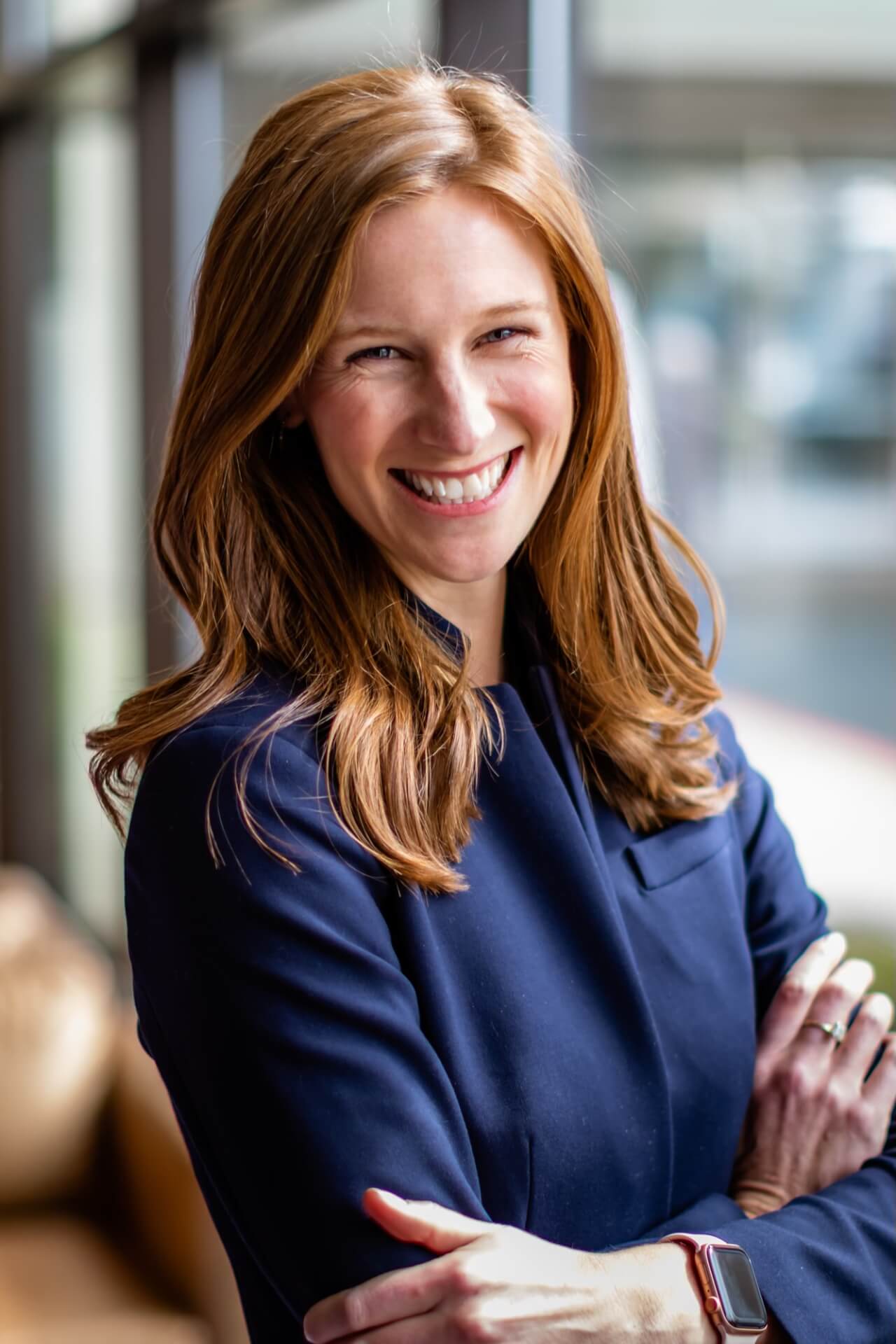
Featured Guest:
Madeline Fredin, Vice President of Partnership Strategy, Alloy Labs
Madeline Fredin is the Head of Growth at Alloy Labs, where she helps banks create differentiating advantage through collaboration and innovation. Her work spans emerging technologies like AI and digital identity, where she guides members in translating market shifts into actionable strategies and partnerships. Prior to Alloy Labs, Madeline led strategy for Crowe LLP’s financial services consulting practice, with deep expertise in design thinking and new product development. She began her career designing software for credit and commercial lenders. Madeline holds a B.A. in Business/Economics from Wheaton College and is based in Minneapolis.
Episode Transcript
0:02 Social currency powered by Sunrise Banks is a podcast that introduces you to some of the most innovative change makers in finance, technology, and all things social impact.
0:10 We walk through how they’re opening doors, reimagining industries with a focus on community, conservation, and accessibility.
0:17 I’m your host, Tyler Seydel, and I’m Eric Schurr.
0:21 From social entrepreneurs to compliance innovators and payments pioneers, we share the stories behind a growing movement working toward a world where opportunity is within everyone’s reach.
0:34 I’m Tyler Seydel and I’m Eric Schurr.
0:37 Today, we’ll talk about the future of community banking, covering the near term, mid-term, and maybe even long range trends around product-led growth, using AI to scale and expanding entrepreneurship.
0:50 Our guest today is gonna be Madeline Fredin.
0:52 She’s the vice president of partnership strategy at the one, the only, the Alloy Labs, working with banks on partnership opportunities and emerging trends prior to this gig, which very much is a dream job for so many.
1:05 She worked at Crow, and she was educated at Wheaton College.
1:09 Madeleine, thank you for joining us today.
1:11 As the first question out of the gate, what pulled you into the space initially?
1:14 Was it intentional or did you just fall in?
1:17 I’ve never told this story publicly, but it was absolutely an accident.
1:21 I was applying for a consulting position, and it was only in my final interview when I was asked, why banking, that I realized I was applying for a banking specific consulting position.
1:32 I then came to love the space, and have stayed in it for the last decade, but, to be truly honest, it was an accident to begin with.
1:40 but I got put on a product team right away.
1:43 And I was working on a team that was automating the spreading for floor plan lenders.
1:48 so, these were early days.
1:50 We had classic OCR.
1:53 It was good for like 60% quality, but then we had all the mechanical Turks behind the scenes, fixing everything, living up.
2:00 To the promises of automation.
2:03 but even then, I know we’re gonna talk AI, but I remember having conversations with credit managers and I was, I was a young BA and I was passionate about the products that we were building and automating this highly manual work.
2:16 But I had credit managers telling me, Can you not spread a handful every month because we’ve got new credit analysts and this is an excellent training activity.
2:27 I want them to have the experience of manually spreading this GM financial statement into our format.
2:33 And I remember just being miffed of like, what?
2:37 Like that’s gonna take forever.
2:38 Who would want to do that by hand?
2:40 And it’s so funny how these things.
2:42 have continued to play out.
2:44 But anyway, I loved my time on that team, learned a ton about products, about banking, and through that did a deep kind of detour into design thinking, business strategy, and kind of found my way more into strategic planning practices, got connected with Alloy Labs, even while I was at Crow, we’re good partners.
3:06 still with Crow and, so once I learned about Alloy Labs and the, the banks and what they were doing in this group of like, these are, these are all the innovative banks.
3:15 I mean, shout out to Sunrise Banks as well as, you know, premier members, thank you so much.
3:20 but they’re all collaborating on figuring out it was like, this next era of community banking requires new ways of managing new types of.
3:28 Products, and there’s not really a blueprint for this the way that there historically has been like this, these are the banks that I want to be working with.
3:36 I had so much respect for all the Alloy Lab’s members that, it was just a couple of years ago made the leap and now I’m here working alongside our alliance of community banks trying to do just that of charting the future of Community bank without losing the heart of it.
3:52 so yeah, so that’s me, that’s my, my journey to where we are today.
3:56 Well, you know, I appreciate that.
3:57 When you say charting the journey without losing the heart of it, I think that you captured the sentiment very much in the sense that we’re coming to lift up an industry, not to change it or revisit, as much as we’re there to support and reach new heights.
4:09 During your time at Crow and knowing you’re having interaction with Alloy Labs, what did you start to see inside of banks that led you to maybe join Alloy Labs, so you could make that difference?
4:20 Yeah, the biggest was the eroding of traditional competitive modes.
4:26 I think historically it’s like we have, we have a large country, we have broad reaching geographies, and when banking had to be done in person, it made sense to have a branch and a bank in every community to serve their needs.
4:40 And With everything moving digitally, there has been this, I think erosion of that protection saying, actually, I don’t necessarily, I don’t need to bank locally.
4:52 And so there’s been this, rethinking of, OK, if not geography, then what?
4:57 What is going to be the thing that sets me apart?
5:01 I am a student of Roger Martin.
5:03 I think his playing to win framework is simple and elegant for figuring out how do I actually pursue differentiation, and there’s two key choices around where do I play, which is essentially, what customers am I uniquely positioned to serve and meet their needs, and then the how to win choice of what is my competitive advantage that I can serve those customers better than anybody else.
5:30 and so I was seeing this, gravitation toward business strategy in community banking in a way where historically, I think banking was the business model.
5:42 Banking, it was almost operated like a franchise where you, if you’re opening, you know, a crumble cookie, for example, they’re gonna hand you the operating playbook and say, congratulations, you’re now, you know, operating this crumble cookie.
5:56 This is how you do it.
5:57 And I think a lot of community banking was like that of, I’m gonna cut and paste the franchise playbook of community banking, and that has gone away.
6:06 And so now we have this rationalization of, OK, if I can’t do that, then who, who am I going to serve and how am I going to serve them?
6:16 and that, you know, entrance of, business strategy into the banking space just excited me so much.
6:25 so yeah, that was, that was the, the draw, for me.
6:30 Madeleine, you talk, we’ll, we’ll get to that, that question of innovation a little bit later, and, and, and tossing aside the franchise model of community banking, but getting back to how do I differentiate myself.
6:42 At first glance, it appears that products and services in banking are pretty well established.
6:46 Even with the, even the latest FinTech with a great customer experience, it just, is looking for a bank to basically take a deposit or make a loan.
6:53 So, how would you describe product-led growth and innovation and talk about why this matters, particularly today?
7:04 Oh, speaking my love language, yes, so.
7:09 When I ask a traditional community bank, like, what are your products, oftentimes I start getting a list of like, well, we have checking accounts, we have CDs, we have savings accounts, and what I’m getting actually is a list of commodities.
7:23 I was like, these are, these accounts exist at every single bank and I think that in order to start to To lean into that differentiation, there has to be a distinction between what is the account versus what is the product.
7:41 And so when I think about product, I actually think about it through the lens of, OK, if you’re familiar with Clayton Christensen, he had his jobs to be done theory around, OK, customers actually Don’t buy products, they hire products to help them get a job done.
7:58 He did that phenomenal research.
8:00 It’s very famous with McDonald’s around, you know, what jobs are these early morning drive-through customers, hiring milkshakes to do for them.
8:09 It’s like, oh, well, it fills them up and it, gives them something to do during their commute, and it was, great research, but I, I love that reframe around, OK, what is the, what is the job to be done?
8:22 And so when you look at traditional bank accounts, it is very much framed through the lens of the functional capability that the bank offers, and products are not like that.
8:34 Products are framed through the lens of how, what value is this delivering to the customer.
8:40 and in our, we actually just recently in our strategy and business model, COE had a debate between like, How much is marketing versus how much is product innovation?
8:50 And, truthfully, it’s a blurry line.
8:54 but ideally, there is, like, if you really want sticky relationships with your customers, it does need to be more than marketing.
9:01 It does need to be, we’re not just going to flip the script and it’s like, well, it’s actually not positive pay, it’s preventing fraud.
9:08 It’s like, But it under the hood, it’s still positive pay.
9:11 It’s like, well, if we think about, that’s, that’s a marketing rebrand.
9:15 If we want to think about like product-led growth, it’s like, oh, we have elderly customers that their emotional job to be done is to feel that their life savings are secure, and they have functional jobs to be done around identifying and avoiding scams.
9:32 Interesting.
9:34 What else could we offer them besides just traditional, oh, yes, we have FDIC insurance and we have checking and savings accounts.
9:41 What else could we build into this that would help them get those jobs done?
9:45 We invested in a company called Careful, and so they are a platform that’s helping.
9:51 kind of prevent, elder fraud and elder abuse by managing or monitoring those transactions, and giving them alerts and giving them the opportunity to pull in their caregivers and children to help them do that work of monitoring their finances together.
10:09 and I, I love this example because, it touches on what we call our edge of money investment thesis.
10:16 So at Aller Labs, we run not only the alliance, but we also run a venture capital fund, and one of the ways that we invest is around this theory that You know, most community banks see themselves as, you know, being in the center of money, you know, we, we’ve got accounts, but that’s so much of the value actually happens on the edge of money.
10:37 it’s not just a mortgage, it’s, it’s a transition.
10:39 It’s new, it’s, it’s a move, it’s new schools, it’s new friends and community and It’s like, oh wow, there’s so much work to be done.
10:48 How might we as a bank position ourselves, not just to solve the center of money and that financial job to be done, but all of those jobs around it.
10:57 and Careful does a really good job with that as well, of like being, being in that edge of money.
11:01 So, this is a very long-winded answer to your question of product-led growth, but that, that would be my answer is to pursue.
11:10 Product, first, like, back to your where to play, who are the customers that we’re focused on?
11:16 What jobs do they have to be done that we can go after and help them get done better than anybody else, and then building in product that actually extends past those core bank commodities.
11:29 To be able to actually capture value.
11:31 That’s a piece that I think banks are hesitant because fees have such a bad rap, because historically they’ve been punitive instead of value additive, and so it’s like, actually it’s like you, like every fintech out there, the fintechs are not afraid to do this, to charge for the value that they are creating, and I think banks have been hesitant to really do that or haven’t been able to be successful, but that’s, that’s what I would say in terms of.
11:56 My vision for product-led growth.
11:59 No, that’s, that’s, that’s fantastic.
12:00 And Madeleine, I’m sure that there are some folks listening who either have been assigned the innovator role or have innovation as part of their, their job description, and what you just described probably got people excited, but Maybe at the same time that they’re they’re saying to themselves, this is a very different way of thinking.
12:21 My, my colleagues don’t think this way.
12:24 So, in your work with, with community banks and other community-based financials, as part of this product-led strategy, how do you, like, what are some of the common, common, hurdles that you’ve experienced, and maybe some of the ways, maybe a couple of tips and tricks you could, you could provide.
12:42 To help individual contributors who are kind of at the tip of the spear of innovation in their organization to be able to start having this conversation and opening up that way of thinking.
12:54 The biggest pushback that I get is we’re a community bank, therefore, we are for everyone, and that there is this resistance to anything that’s perceived as exclusive because, again, there are regulations, and I’m not saying that to have a strategy that focuses on a segment means that you have to, you have to deny service to anybody else.
13:17 It’s like, absolutely not.
13:19 That’s not a good way to do business.
13:21 Anyway, like Trader Joe’s, they’ve got small aisles, terrible parking.
13:25 They’re great if you’re single or retired and you want that experience.
13:29 They’re not great if you’ve got 3 kids in a shopping cart and a minivan to park.
13:35 So it’s not like they’re keeping large families out, but they are.
13:39 Catering to a specific segment that really loves shopping there, and banks can do that as well, and I call this opinionated banking of like, we, we have an opinion about which customers that we can serve and how we want to serve them.
13:56 So that mindset of, yes, our doors are open to everyone, however, we are going to focus on a particular subset of customers to create value for.
14:07 And we don’t need to justify every piece of product innovation as being desirable by everybody, or our loudest, most frequent branch-based customer, because I think that also tends to be the filter by which things is like, but Mary comes in the branch every day, and she would be so mad if we offered or didn’t offer that.
14:30 I was like, I feel for Mary, however, that might not be your best prioritization strategy.
14:37 So that like opinionated banking as a mindset shift, I would say is foundational.
14:46 Besides that, once you get to the point of identifying, OK, who then are we going to focus on letting your customers’ needs be your roadmap.
14:57 I lead strategic planning for a lot of community banks, and inevitably that strategic plan is dictated by, let’s copy whatever our nearest competitors are doing, which if your pursuit is differentiation, is a very poor decision.
15:16 or it is heavily, performance based of, OK, we just need to cut costs, we need to, you know, make sure that we are considering the technologies du jour that we’re hearing about at all these conferences and that we can go to our board and say, we’re doing something about this.
15:37 We, we’ve nodded at stablecoins and we’re doing the AI and we’ve sprinkled in a blockchain and it’s fine.
15:45 And there’s no, there’s no customer in that.
15:49 And it’s, so I would say opinionated banking and then letting that customer dictate your roadmap, are two essential foundations for how you do this.
16:02 There are lots of, I would say, cultural and organizational challenges that come up.
16:06 On that, we host a product management workshop for our banks in Chicago every summer, and one of the, we gave some examples of like, what’s an example of a good product versus a bad product.
16:18 And on that bad product list, I’ve already listed them, checking account.
16:23 Not a great in terms of our definition of like these, you know, opinionated products.
16:27 Not a great example, but they’re like, oh, are you the, the new in town mortgage of that includes opportunities to connect or, shop at local businesses or whatever that might be.
16:40 And, I think often it gets put in this category of like, oh, it’s a bundled product.
16:45 There’s, there’s other stuff in there.
16:47 And I had one banker raise her hand and she’s like, that sounds great, but you just described six different departments that all have separate incentives, and for us to offer that product would destroy our our org chart.
17:00 It’s like, fascinating.
17:03 OK, so, I think those are some of the like, Things are like, OK, starting with vision, strategic choice around who, and then you’re like, if we really are going to let our customer be our roadmap organizationally, how do we need to reorganize in order to actually execute on that vision, and that’s hard.
17:23 I, I will acknowledge that.
17:25 I’m seeing banks do it well, but it is hard.
17:28 So you’re kind of talking through a little things that the banks struggle with in terms of strategic planning, that road mapping, that 1 to 3, if not even the 3 to 5, and I think what you’re touching on is absolutely accurate.
17:38 You have a lot of maybe community banks that don’t, may not have the ability to hire somebody that’s really solely focused on strategy, product strategy, or any of the kind of sub-process fulfillment that goes along therewith.
17:51 And you touched on something I think that’s very deep, very profound, and I found myself actually just taking a lot of notes around.
17:58 Your customer centric journey.
18:00 I would, and that’s not necessarily a new idea.
18:03 That idea is almost as old as time, it parallels maybe Facebook versus Instagram and how Instagram was capturing market share because it took less clicks to post a picture.
18:10 What are some things that you think community banks or traditional banks are still struggling with in relation to innovation or that strategic process mapping?
18:19 You touched on a few.
18:20 Is there anything in terms of depth or that you feel is really being missed right now?
18:28 For as much as community banks are, are in there, they’re in the, they’re in their communities, I think that there is a lack of real insight being captured around what their customers need and want and Part of that is structural of we’ve had a decade of proliferation of systems within the bank that don’t talk to each other, and so trying to actually understand your customer and their relationship to you as a financial institution is extremely difficult if you haven’t invested in any kind of foundational or unified layer of data.
19:09 Across all of those systems to be able to get a picture of who is this customer, how do they engage with us.
19:15 Also, to be able to mine their transaction data.
19:18 There’s so much, there’s so much value in that data, and I think so many community banks have been late to the party in acknowledging the wealth that they have in their data, and to let alone, you know, see it, but to then take that and leverage it into Not just offers, but product roadmap of what, what do we know?
19:41 What do we know to be true, about our customers, so, I would say that most are flying blind, in terms of who, who should we, who should we prioritize and what, what value, and you, you mentioned it of like hiring in like product talent is difficult cause there, there are specific methodologies that serve a product led organization well that are not.
20:12 Native to community banking, and a lot of that is primary customer research of having customer interviews that don’t go like What would you like us to offer you?
20:23 And I I do, some training.
20:29 We created a master class, for members on customer interviewing and, we, to do that, we, we try to get a sense for like, how are you guys doing this today?
20:38 And it’s a lot of focus groups and it’s a lot of, you know, asking it’s like, OK, so what, what would you like from us?
20:43 But it’s like, that is the work of the bank to be able to get the data and it’s your job to synthesize that into the insight of 00, I see that, you know, my customers, I have, I have, you know, a quarter of my customers that have Robinhood accounts.
21:00 Why?
21:01 I was like, oh, interesting, because my wealth threshold is $100,000 and I have a bunch of 20-30 year olds.
21:07 I hope that’s the case at your community bank.
21:10 that, you know, just don’t even hit that threshold, but they still want investment products.
21:13 Oh, interesting.
21:14 Do we need to, we’re, we’re missing out on those deposits and potentially some, you know, non-interest income by letting them take that elsewhere.
21:24 It’s like, oh, maybe we need a digital investment product and maybe that could be our path to creating more value for millennials.
21:30 It’s like, oh, fascinating.
21:32 Anyway, so those are That, that would be my, that would be my wish list for community banks.
21:39 It’s like, let’s get some unified data, let’s learn how to interpret that data into product strategy.
21:45 You know, one thing that I can say is you’re a very illustrative speaker, and you do a fantastic job of driving home points, providing examples, providing real-time clarity.
21:56 It’s fantastic in terms of insight, as well as actionable information.
22:00 So I just wanted to position that with you because how articulate you are.
22:04 If you folks have not had any interaction with Madeleine, seek her out.
22:07 She’s obviously mentioned a couple of master classes, things that they host in relation to product.
22:12 I myself am getting interested.
22:13 I’m getting excited.
22:14 I’m about ready to reach out to Jackie and have her schedule some time with you, just to unpack what’s living, but in that mind of yours, it’s brilliant, it’s very much bright.
22:23 The one thing that you mentioned is that we And we as a very broad pronoun, but people in the industry, we’re not capturing true needs and true wants.
22:31 We’re maybe listening to the Marys that are maybe voicing their opinion, we might be relying on, on net promoter scores a little too heavily.
22:38 And so I think that that’s all well stated.
22:40 When you’re talking about collaboration over competition in Alloy Labs, how does Alloy Labs help make the banking model work?
22:48 How do you folks jump in and help drive this forward?
22:50 Can you maybe just kind of color in how you folks can help take people to the next level in terms of innovation, insight, and what a personal product path could be for them?
23:00 Yeah, I would say the difficulty for most community bank leaders is not necessarily the getting to the decision of like, I should probably, you know, partner with a FinTech to offer a new product.
23:15 It’s like, that seems like a good strategy.
23:18 It is all in the execution.
23:20 We have a model of an excellence model around their strategic excellence, operational excellent or strategic executional excellence and operational excellence, and I think a lot of community bank leaders are really good at strategic excellence and operational excellence, which is like making the decisions and then, you know, squeezing every bit out of, you know, operationalizing that system.
23:41 But that path of transformation of getting from making the decision to the point where it is implemented, optimized, and then scaled is very difficult, and there’s actually not a lot of, I would say, trade secrets in that part of the journey, and it is an excellent opportunity to collaborate with other leaders who have done it before and led their banks through this type of transformation.
24:06 So a lot of the conversations are there.
24:10 I would say the other piece of this is separating signal from noise, That is one thing that I think our members trust us to do as well, not only because of the purview that we as a team have into Banks, but also we have our ventures team that is doing that in the market, and so we are synthesizing the insights across the community bank.
24:33 It’s like, this is what we are hearing of like, oh, we’ve been talking at Alloy Labs about deposits are not going to be cheap forever since 2018, and our members have been pursuing deposit gathering strategies way before it was so hip and popular, so I feel a sense of pride.
24:50 Around that.
24:52 And the other piece of that is like we’ve been curating partners in the market to be able to help banks do that because it’s so noisy.
24:59 I was just, we were just at FinTech meetup this week and it is the number of AI startups is just overwhelming and to have to choose and walk through like, how do I know, how do I pick the winners?
25:13 How do I know who’s gonna have staying power?
25:17 Having doing that in community or having your own dedicated ventures team who’s gonna help you see that, whose job it is to be able to make those types of bets is a real value add.
25:28 So, I would say, I would say those are probably the two biggest, you know, values that community bankers get out of participating in Allo Labs, and honestly, we just have a lot of fun too.
25:37 Eric knows we’ve, he’s been in our, our Nashville annual member meeting every year and we have a good time.
25:43 Absolutely.
25:45 Madeleine, I’m so happy you brought up, artificial intelligence and FinTech Meetup because no conversation around innovation is complete without it, at least this year.
25:54 Yeah, I’d like, I’d like to say we’re fresh, but maybe we’re still a little jet lagged off off of FinTech Meetup, but in either case, I know.
26:02 When we talk about artificial intelligence, I think you and I were actually in a in a brief conversation during the conference where we had a banker talk about artificial intelligence, and he was talking about the fact that He knew he had to make an investment, and he also knew he was going to be wrong.
26:17 And so while he’s making the investment, he’s also preparing his organization to, to, to fail quickly and learn to pivot without blame.
26:28 I’m, I’m curious, coming out of that conference, as you mentioned, AI was spoken, we saw many bankers that are just all over the roadmap and the journey.
26:38 Some are still in discovery, some are still learning how to spell it.
26:42 Some are really diving into, this agency, the, the agent economy, the, the tools and productivity that that AI promises, I guess.
26:56 I, I’ll take any insights or any comment that you may have, that you may, that may have stuck with you, at least at this early stage coming out of that conference around artificial intelligence, and then I want to dive into just a couple of aspects of this, of this issue.
27:10 But first, anything that popped, that popped out of the conference?
27:13 I think that This is shaping or reshaping the fabric of every industry, but I think especially financial services.
27:24 one of the things that I think we’re not having enough conversations about yet is AI in the hands of our customers.
27:33 Right now, so much of the focus on the community bank side is around like, well, what are we gonna deploy for our operations, and I think there’s a sense of like we can set the pace, we can set the pace for ourselves, and I think that we are, I don’t even know how many, I can’t even measure time in like months or years, it’s like we’re probably days or weeks away from Your customers having their own agents provided by somebody else who’s gonna come knocking on the door, to be able to start facilitating that relationship, and I think that’s part of the conversation that was happening at FinTech meetup this week that I’m like, Oh yes, this needs, we, we don’t have the, we don’t have the privilege of waiting until it’s like, we would like to wait until we get our, get everything situated internally before we deal with that, but we’re gonna have to parallel track a lot of these things.
28:23 This is the movie poster for everything everywhere all at once, and that is just The nature of what AI has done to every industry, but to be able to track with, you need to be having the conversation around governance and risk while starting your pilots internally and considering how you’re going to transform your workforce and meet their, your customers where they’re at.
28:45 I was like, there is no sequencing.
28:48 and so that, that was probably, maybe I was, I was feeling a little empathetic for the community bank leader who’s maybe walking away feeling This is overwhelming, and it is.
29:00 I will not diminish that.
29:02 It is absolutely overwhelming, but that is what it is to lead a bank in 2026.
29:08 Sure, and thanks for bringing that up because that was one of the, one of the aha moments for me is, when I started listening to conversations around agentic AI in the hands of our customers.
29:19 Number one, it’s outside the walls of the bank and we cannot control the velocity of their uptake.
29:24 And their adoption of these tools and how they present themselves to us, but then we have to react as banks.
29:29 So who’s developing the know your agent program?
29:32 And what does that look like?
29:33 And how do you, how do you sign those agreements?
29:37 How do you fashion and sign those agreements that allow a bank to retain.
29:42 retain rights as money is moving on behalf of the agents, on behalf of the customers.
29:47 So, it’s, it’s, it’s, it’s fascinating and it’s frightful at the, at the same time.
29:54 It just is.
29:55 A, a couple of questions for you, as, as an observer, have you seen, the promise of the return on investment, yet, or are you seeing pockets?
30:07 Are you hearing success stories, I guess, with the investment?
30:11 Oh yes, I have some stories.
30:14 I would say.
30:16 Don’t expect an ROI at the beginning of your maturity curve.
30:21 The ROI is not captured economically, it is captured in learning.
30:26 And you can say that about probably every innovation, you know, curve, especially AI when phase one is let’s turn on a co-pilot, for our employees and help them, you know, rewrite their emails, and there’s, there’s a lot of just learning going on with this new engagement of how, how does work get done.
30:49 That is not where the ROI is going to really come, but you can’t skip that phase of, of learning through doing.
30:57 So don’t let the lack of ROI in the productivity phase keep you from jumping in the pool.
31:02 You gotta get through it.
31:04 I would say in terms of where we’re starting to actually see some ROI, there is some low hanging fruit.
31:13 we’ve had some banks that have rationalized their portfolio of SASS products and said, what doesn’t have a lot of front end and has a low risk profile that we could probably build ourselves at this point because that bar has been lowered so significantly.
31:28 On how we build and own these models ourselves.
31:31 so we had one bank that eliminated, it was like a $300,000 contract for a small dollar loan, product that was like, oh, you overdraft, we’re gonna a decision on, you know, whether or not to approve this or not.
31:45 and they were able to pull that in-house and build that and eliminate that recurring subscription.
31:50 So there was some ROI in that.
31:52 I would say this is a note, I don’t know if you have any FinTech listeners, but if you do, this is a note for FinTech’s pitching banks.
31:59 If you’re pitching a community bank, the only pitch cannot be this will lower your headcount.
32:05 We’ve, like, your deposit ops department might be Jim and Carol.
32:09 It’s like, we need both of them.
32:10 And so I, I, and it’s not that big of an ROI even if we got rid of both of Jim and Carol, like, that’s still not enough of a return.
32:18 There needs to be a growth proposition in order to justify the investment.
32:23 And so that it does bring us full circle back to like business strategy of a, I don’t love the idea of like, oh, what’s your AI strategy?
32:33 It’s like, That’s the wrong question.
32:36 The right question is, what’s your business strategy?
32:38 Where are you trying to play?
32:39 How are you trying to win?
32:41 How then does AI get tucked into that strategy to enable you to do that better and faster than your competitors?
32:49 so, I do think that these AI deployments are, it should track with your business strategy in order to start seeing that ROI.
33:00 so yeah, I’ll, I’ll stop there.
33:02 We could, I’ll let you ask another question because otherwise I will keep rambling.
33:06 No, that’s fair.
33:06 And then you still have to discount the ROI because Jim and Carol aren’t pulling their, their deposits out of your account, out of your bank.
33:12 So there you go.
33:15 I, you know, the, the other question is just, it’s near and dear to my heart.
33:18 It wouldn’t.
33:18 We start talking about artificial intelligence and productivity tools, in general, is, what is the human impact of all this, right?
33:25 Where’s the human in this?
33:26 And for other technologies, they seem to be enablers, but AI feels different because it feels it not only enables, but it can displace.
33:35 And so, we’ve, we We, we’ve heard conversations in other industries, particularly, particularly the information technology, area where, where maybe, frontline, beginning coding is going to be, going to be a thing of the past.
33:53 Do you see that same trend potentially occurring in banking?
33:58 And if so, what do you think that that portends for the future of financial services?
34:08 I think work is going to change for everybody.
34:14 I have confidence that there is still good work to be done for humans in banks.
34:23 I read a great article, actually shared by another one of our members, but it was published by Foundation Capital, and they outlined 4 new buckets of work that humans are going to fill, and it was basically, these are categories, not the actual titles, but, chief accountability officers, system architects, relationship managers, and validators.
34:46 And it was the most helpful model that I had seen of casting a vision for this joint human and AI workforce.
34:56 and so that’s a good read.
34:58 We can, I can send you the link so we can share it.
35:02 that I thought was interesting because of the vision for The premacy of like, where does human human skill remain essential in these future workforces.
35:15 in terms of, I think the big question a lot of, bankers are having, and it goes back to the like the example I shared at the beginning around, I want my, I want my credit analysts to spread this manually because they’re gonna learn, they’re gonna learn by doing this.
35:31 So, so what do we do when so many of those entry level jobs are do become automated, and I think this is a really important question and it doesn’t have a super easy answer.
35:42 One of the things I’m interested in is this idea of simulations of, OK, could we, could we fast track because there’s a difference between, you know, sitting at a desk and taking a test and learning intellectually versus the like, oh, this is your first deal, young lender.
36:04 You are gonna have to make decisions and put the bank at risk with these decisions of whether to lend and.
36:10 What terms, and there is very, it’s very different when you’ve got skin in the game.
36:15 And so to the degree that lending is an art form that must be learned through experiment or through experience, how do you replicate that experience for young, for young lenders?
36:28 and I think that there’s some promise in like more of these, like, OK, can, can we simulate that?
36:34 I, I don’t know.
36:35 I’m, I’m interested to figure out that piece of it.
36:40 Yeah, and I think too, the other, the other notion that, that, that rumbles around in my brain is the notion of relationship and trust, as it pertains to banking.
36:50 And while, while these specialized financial service providers can be very useful for folks who have, who are very comfortable with their relationship with their money.
37:03 I think for the vast majority of folks who aren’t as comfortable, aren’t as knowledgeable, don’t feel as confident around the moneymaking decisions, relationship has traditionally been so important.
37:15 And that’s where they go to their financial institution.
37:18 So, I look at that and I say, man, how will, will artificially, cause for Sunrise as, as an example, as a banking as a service bank on, on, on our side of the bank, we effectively, we knowledgeably outsource that relationship, if you will, to a third party financial technology firm.
37:36 And that’s fine because they can, they can, they are reaching targeted segments of customers that we would love to service, we just can’t do so profitably.
37:45 Right, at scale, but at the same time we understand that’s the trade-off.
37:48 So when I think about artificial intelligence and the notion of relationship and trust, I don’t know if you have any comments on that too.
37:55 Yeah, On the one hand, I agree with you that Humans trust humans.
38:04 I don’t think that there’s going to be this like.
38:08 Absolute, like, oh, I, speed is everything, you know, programmability, like I’m gonna choose all of these values over trust and relationship.
38:18 Like, I think Silicon Valley would like us to believe that it’s the case, and, but I, I don’t think we see it happening in reality.
38:26 The counterpoint to that is, have you been paying attention to how much therapy is being done by chat GPT?
38:34 It is one of the top use cases, and so there is something about these machines that are able to emulate humans in a way to show empathy, even if it’s just Because it’s in their training data, but that it creates a safe space for people to share and ask questions and be vulnerable in ways that either they didn’t have access to, cause therapy I think is difficult to get access to in some communities and under some insurance providers.
39:07 So in some ways I’m like, this is filling a gap.
39:11 Is it taking away from our people choosing?
39:14 This over a traditional the, I don’t know.
39:17 I actually don’t have the answer to that.
39:19 So, I, it’s a gray area for me, Eric, to be honest.
39:23 Yeah, no, it’s, and, and, and it’s, it’s, it’s the mess, and, and I, I love in the mess, and I think this is something that, that I’d love to have a continuing conversation with you on.
39:35 Yeah, this would be great because it, we’ll learn more as we go.
39:38 I think so many community banks are like, oh, AI, like we’re gonna, we’re gonna use it just internally.
39:44 We’re gonna make everything super efficient and, but we’re not gonna lower our headcount, we’re just gonna send them all into the field and they’re gonna build relationships and Because there is this inherent like we’re community banks and that’s like what what our customers want and I think it all comes back down to the, you know, who are you trying to serve?
40:04 What, what value are your customers looking for as you think about reskilling, upskilling, redeploying your workforce in these ways of like being, not being nostalgic for community banking in an unstrategic way.
40:21 that says, relationships first, every ounce of productivity we squeeze with AI is gonna go into relationship building, and we get so many more phone calls from relationship managers asking how your new puppy is.
40:32 It’s like, I don’t know that this is the best use of this.
40:37 I do think.
40:38 More focused customer support can be great, but it might be in product.
40:43 It might be in these other areas.
40:45 And so that would maybe be my challenge to community bankers of like, be thoughtful when you think about redeploying your talent into customer centric roles that might not be frontline support.
40:56 It might be, it might be these other customer supportive roles, that are potentially more scalable and more strategic.
41:07 Well, if you’re a community bank listening right now, that’s some things that you can start doing differently tomorrow to truly make a difference.
41:13 There was a lot of ground that was covered there, a lot of great insight.
41:16 When we’re starting to talk about some of these trends, and we know that AI is a big part of that blockchain, some of the even open banking is that does or doesn’t kind of ebb and flow, wax or wane, but it’s an inevitability in so many words, I think, as I think forward, at least to me, I feel that it is.
41:32 What is a trend, FinTech related or otherwise, that you think is just simply overhyped?
41:39 Oh, yeah, different.
41:45 I, right now, I do think that stablecoins, I would still put in that category as a technology looking for a use case.
41:56 I am willing to be proved wrong on this front, but I think for most community banks, the use cases that, you know, are, are great for stablecoins, like it just doesn’t overlap with their ICP.
42:09 So I would put that one in that camp.
42:15 Are there others?
42:16 I mean, I’m, I am pretty all in on AI, so like, there’s, there are very few AI use cases that I would say are like so overblown.
42:24 I’m like, I just eat it up.
42:26 I’m so interested in this whole category, so it was like, I will probably be the one on LinkedIn that your, your next guest will be like, I saw what Madeleine posted about AI and it’s like so over.
42:36 Over hype.
42:36 Like, so I will put myself of like, absolutely gonna be putting my chips in that camp and letting others put their chips in, you know, the digital assets camp.
42:46 And, you know, we probably just, we’ll meet in the middle somewhere.
42:49 Time will tell, who’s making the right bets, but that’ll be, that’ll be my fast answer for you on that one.
42:57 Madeleine, it’s been great.
42:58 Really appreciate you sharing your thoughts with us today.
43:02 question, when you’re outside of work, what drives you?
43:06 Eric, I have, I have like 100 hobbies.
43:09 I collect them.
43:11 I collect them like stamps.
43:13 this year I took up pottery and scuba diving, so those were the new additions.
43:19 the favorites, longtime favorites, big gardener.
43:22 I love to garden.
43:23 I love to bike.
43:24 I love to boat.
43:25 We’re here in the land of 10,000 lakes.
43:27 I am leaning in as best as I can.
43:31 so yes, I’m a, I’m a hobby collector.
43:33 So if anybody’s got any new hobbies to recommend to me, I am all ears.
43:37 I love trying new hobbies.
43:40 Well, Madeleine, thank you so very much for joining us today on Social Currency.
43:44 it was a pleasure.
43:45 Thank you so much for having me.
43:49 And that engaging dialogue was powered by Sunrise Banks, member FDIC equal housing lender.
43:55 Thanks for listening to the Social Currency podcast by Sunrise Banks.
43:59 If you’ve enjoyed this episode and you’d like to help support the podcast, click like and subscribe anywhere you get your podcast content.
44:06 We’ll see you soon.