


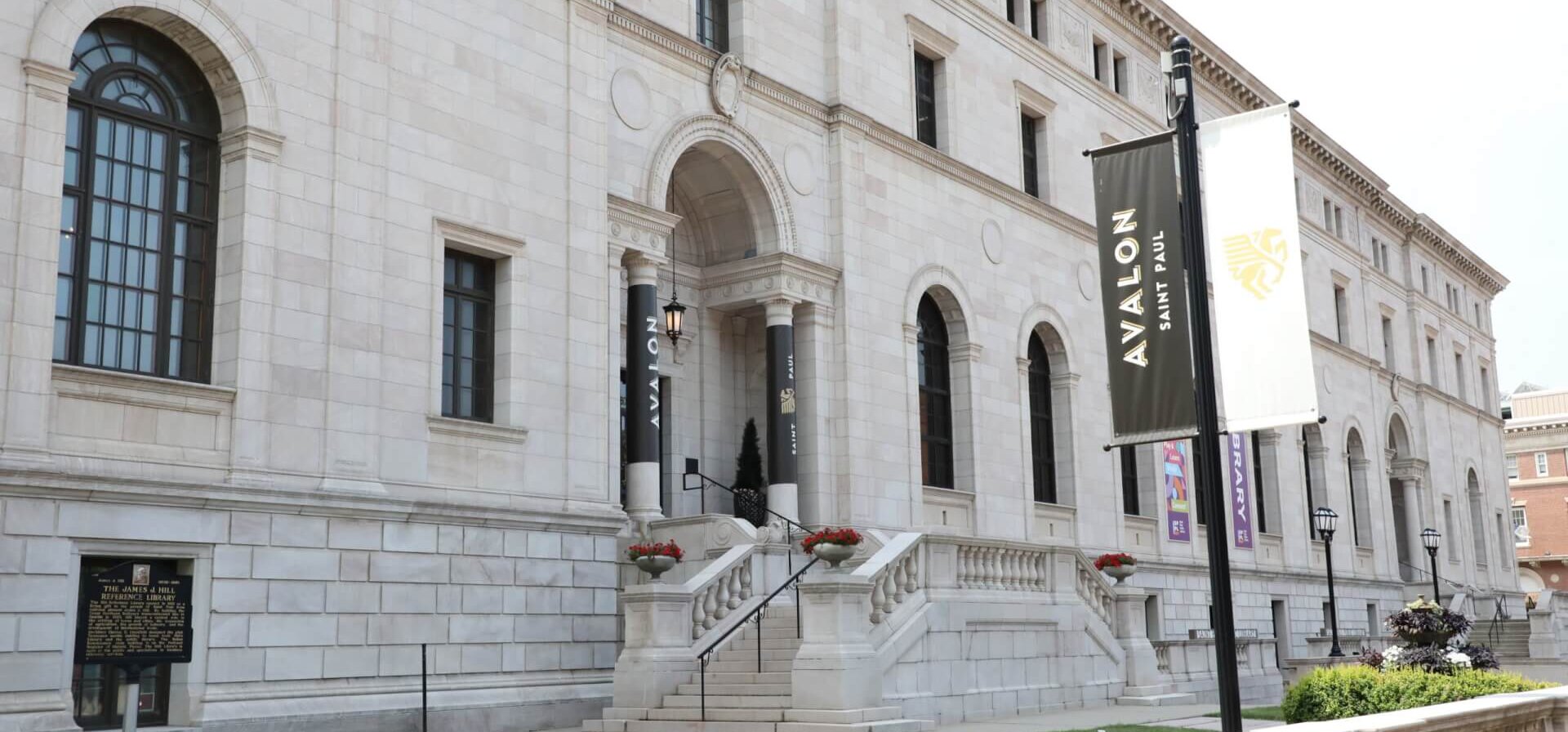
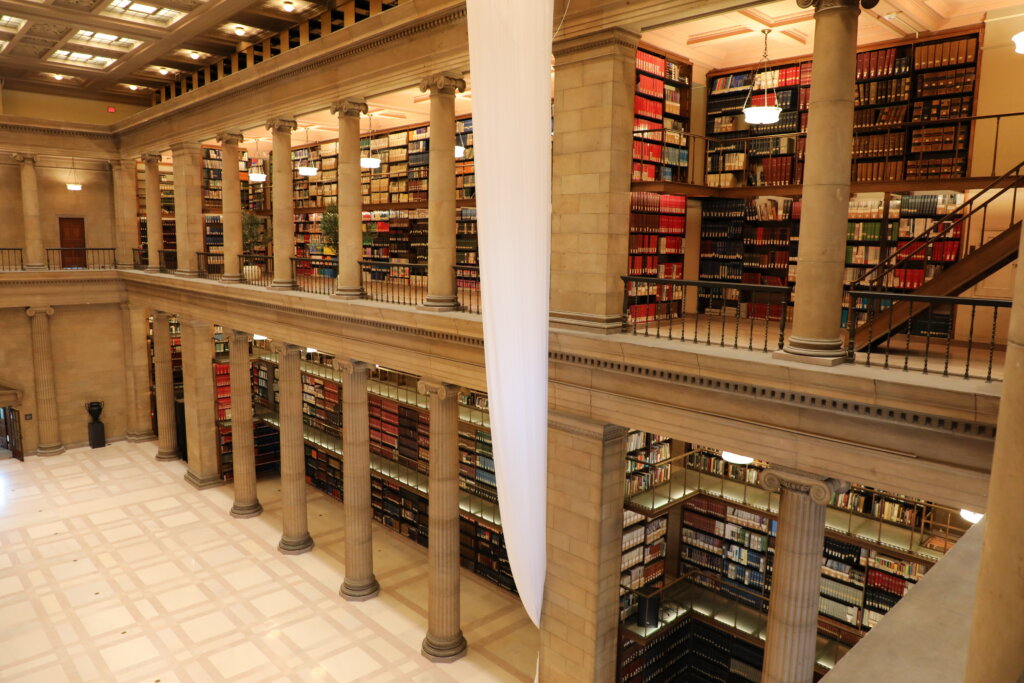
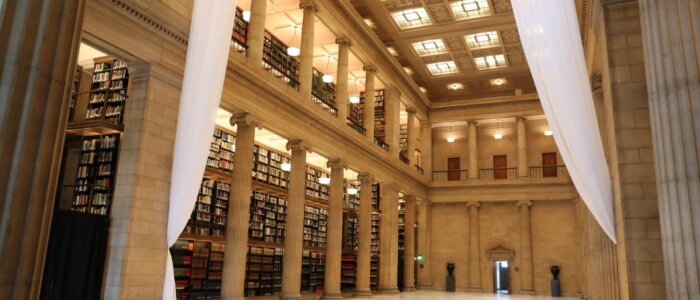
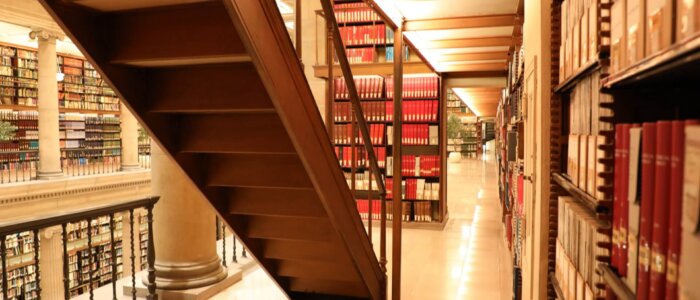
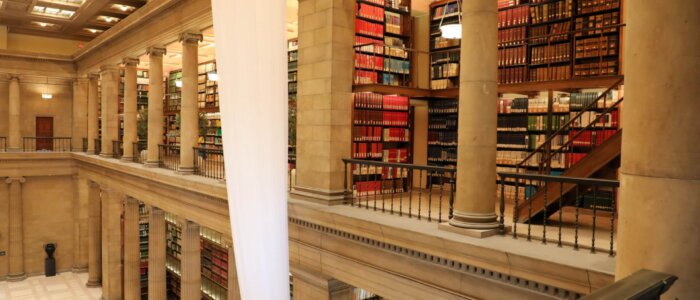
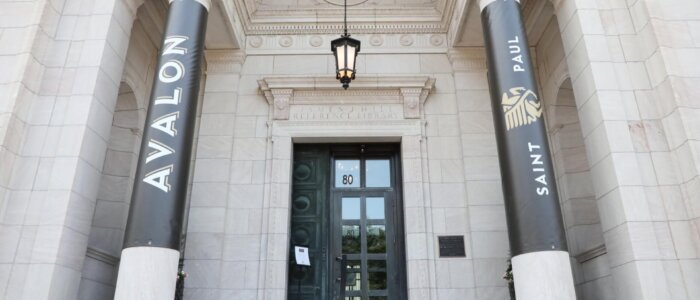
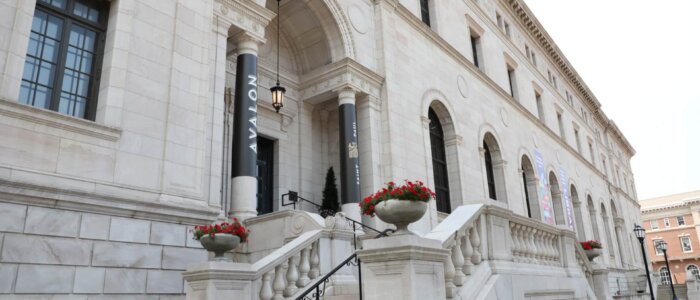
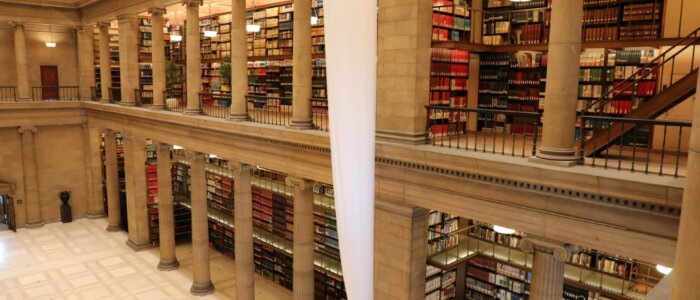
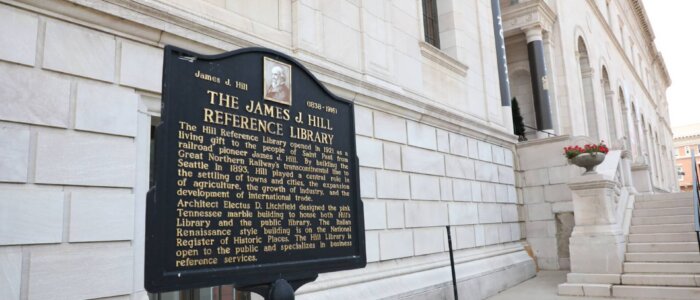
 For nearly 100 years, the historic James J. Hill Reference Library Off Site Link anchored the area overlooking Rice Park in downtown St. Paul. Visitors entered the main space surrounded by shelves and shelves of books spanning three floors. Tall marble columns and massive wooden salon-style tables covered the main floor. And library workers would climb small spiral staircases or library ladders to find reference materials for visitors to browse through.
While the cavernous space itself is no longer a working library, it is taking on a new life as Avalon – a wedding and event venue Off Site Link. Much the main floor still gives visitors a distinct “Beauty and the Beast” library vibe but work behind the scenes has transformed the building into one that is both historic and modern.
Special financing from Sunrise Banks also helped developers make the nearly century-old building much more energy efficient.
A Brief History
Railroad baron James J. Hill built the reference library as a gift to the City of St. Paul. In 1912, he contributed approximately $700,000 towards the building, which was attached to the St. Paul Public Library overlooking Rice Park. Construction began in 1916, but Hill died before the library officially opened five years later.
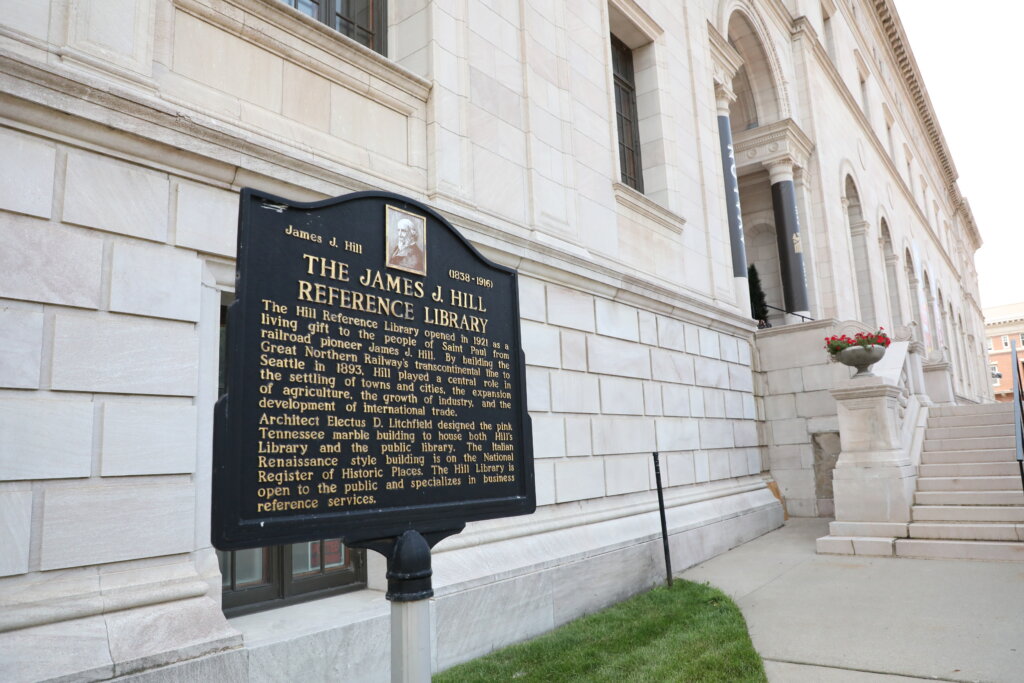 Hill’s family, under the James J. Hill Foundation, operated the business reference library for nearly 100 years. In 1975, it was added to the National Register of Historic Places.
In 2019, the library closed to the public. The Foundation said the building became too expensive to operate and needed major improvements.
First & First, a Minneapolis real estate development firm Off Site Link that specializes in reimagining historically significant buildings, purchased the library two years later. Founder and CEO Peter Remes remembers visiting the library as a college student.
“There were maybe 15 librarians on staff every day. You told them what you were looking for, and they would go to their card catalog system, and they’d pull up the cards for whatever you were looking for,” he recalls. “And then they would pull the books for you, bring them down to the table, and you would then start looking through them.”
Life After Closing
After the library closed, foundation leaders aggressively looked for a buyer for the building. Time after time, they struck out.
“Most people came in and said, ‘It’s beautiful, but too complicated, too much, too many issues, too much stuff to deal with,” says Remes, who was approached several times about buying the building.
About 18 months after the library went up for sale, the foundation came back to Remes and his team at First & First.
“They were consistent,” Remes recalls. “They told me it wasn’t about getting the best price for the building. Instead, they wanted the building to live on and be open to the next generation.”
Remes says he was able to purchase the building for a “pretty favorable price.”
Then came the hard work – navigating through many layers of financing and regulation to restore and upgrade the building into what it is today.

New Sustainable Features
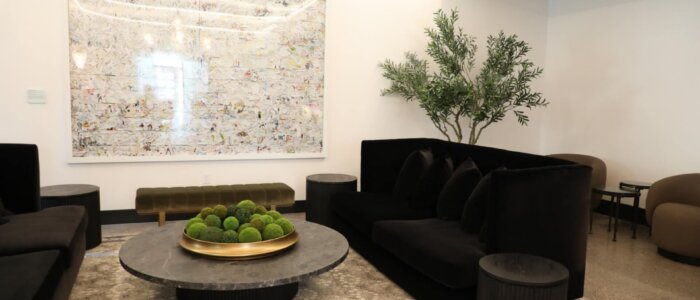
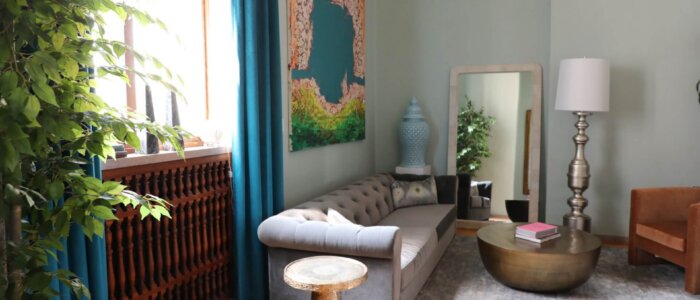
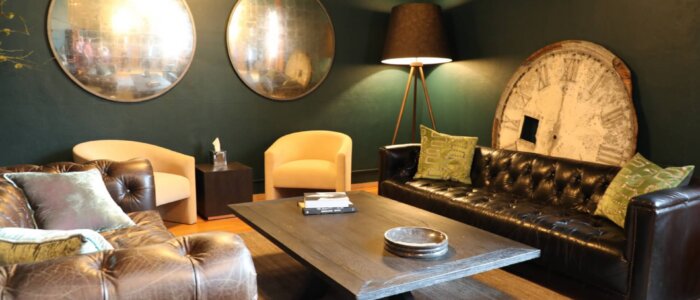
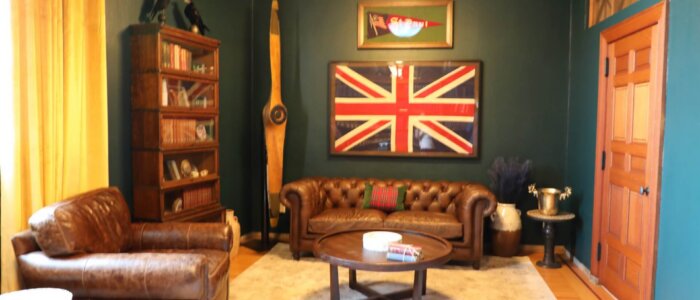
While much of the main library area remains intact, other areas of the building received major cosmetic upgrades. The First & First team added a new stairwell to the back of the building, created a lower-level lounge and transformed several old offices on the second floor into bridal suites, grooms’ lounges and green room spaces for corporate events.
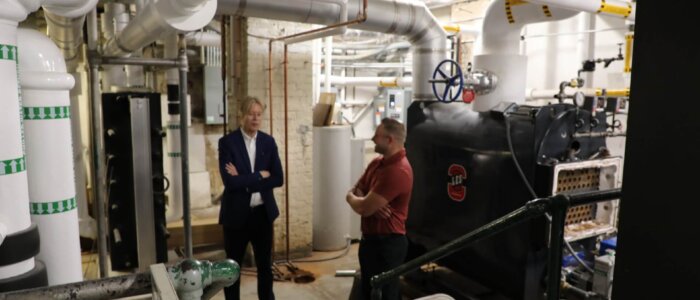
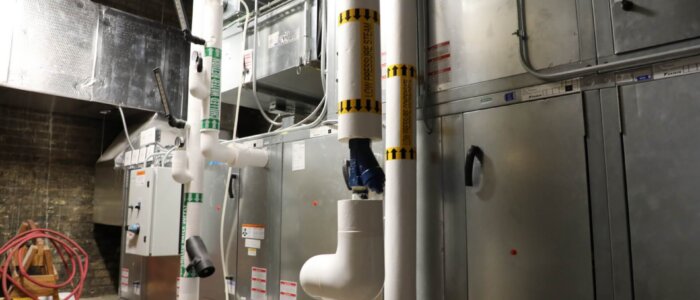
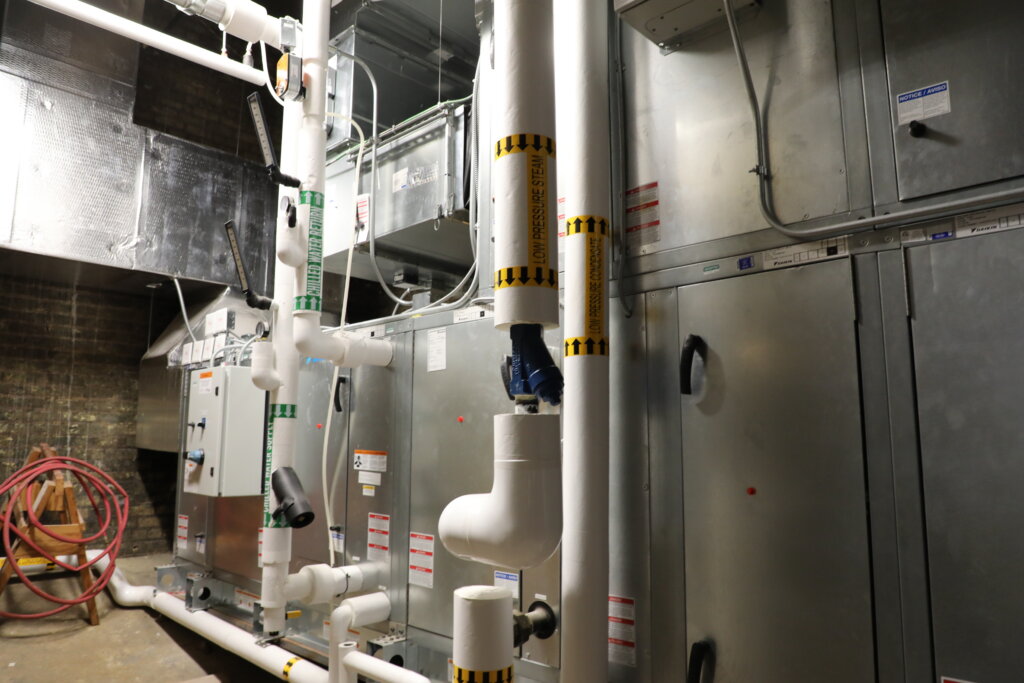 The team also added new LED lights throughout the building, along with new plumbing fixtures, a new boiler and a state-of-the art HVAC system. The system features smart sensors that adjust the temperature automatically, depending on how many people are in the room. It can also direct fresh air from outside in to cool down the building.
Joe Meyer of First & First, says guests will feel much more comfortable in the venue.
“In the past, if you had 250 people here for an event, it would be sweltering – even in the middle of winter,” he explains. “Now, instead of blasting the air conditioning, the HVAC system will cool the room on its own.”
Financing Energy Efficient Upgrades
Updating energy systems in historic buildings can be enormously expensive, often eating up tens of thousands of dollars. The team at First & First was able to take advantage of a Commercial Property Assessed Clean Energy (C-PACE) Loan financed by Sunrise Banks to pay for those upgrades.
Dave Scott, the Executive Vice President – Director of Commercial Banking at Sunrise Banks, says C-PACE lending can help business owners afford energy-efficient projects they might otherwise put off due to high initial costs.
“Commercial building owners can benefit greatly from C-PACE lending,” says Scott. “This type of financing incentivizes purchasing environmentally friendly infrastructure and systems that don’t emit greenhouse gases.”
Minnesota business owners can qualify for up to $20 million in financing through the C-PACE program. Other projects eligible for C-PACE loans can include solar or wind power installations, geothermal projects, water conservation projects, and infrastructure for electric vehicle chargers.
C-PACE loans may also qualify for a lower interest rate through the financing arm of the Net Zero Banking program at Sunrise Banks.
The Role of Net Zero Banking
Net Zero Banking consists of two parts – Net Zero Deposits and Net Zero Financing. For Net Zero Deposits, both personal and business banking customers can designate the money from their checking, savings or CDs to support projects that work to reduce or avoid greenhouse gas emissions. In turn, customers and projects that qualify for Net Zero financing can receive financing with a lower interest rate.
Scott says Avalon is a perfect example of how the life of historic buildings can be prolonged by making those energy-efficient upgrades.
“This will be an exciting new chapter for the venue,” says Scott. “It takes a lot of effort and money to give buildings like this new life, but I’m excited to see the vision the team at First & First has for Avalon play out.”
What Lies Ahead
Since officially opening this spring, Avalon has hosted more than 20 events, including weddings and corporate events. And the center’s calendar is filling up fast.
Remes says he is excited about the future of Avalon and grateful for the support provided by Sunrise Banks.
“Sunrise Banks understood both the complexity of restoring a historic building and our vision for its future,” says Remes. “Their team was collaborative and responsive throughout the process, and the C-PACE financing helped us make the energy-efficient improvements needed to give Avalon a new life.”
To learn more about C-PACE lending and other Net Zero Financing opportunities for Minnesota businesses, visit sunrisebanks.com/c-pace-lending.
Member FDIC.